Revenue recognition determines when and how a business records sales in its books. In practical terms, it shapes your financial reporting and compliance. This guide walks through the why and how of revenue recognition under ASC 606 and IFRS 15, and shows how Odoo can help you apply the rules consistently. Many companies stumble over timing, contract complexity, and variable consideration. Following a clear, five-step approach reduces risk and keeps your statements reliable. We’ll define the concept, run the ASC 606 steps, and outline how Odoo streamlines the work.
What revenue recognition means and why it matters for your business
Revenue recognition is the accounting rule that says when income should appear on the books. Getting it right affects tax reporting, investor information, and day‑to‑day decisions. Accurate recognition keeps stakeholders informed and protects your company from restatements and regulatory scrutiny.
The revenue recognition accounting principle in plain terms
At its core, the principle says: recognize revenue when it’s earned and collectible — not simply when cash changes hands. ASC 606 and IFRS 15 bring consistency by focusing on the transfer of control of goods or services to customers, rather than only legal title or risks and rewards.
How ASC 606 and IFRS 15 frame revenue recognition
Both standards use the same five‑step model to guide recognition, improving comparability across industries and borders. They do differ on specifics — licensing, variable consideration and contract modifications are common areas where guidance diverges — so companies with cross‑border operations should be aware of the nuance.
Recent research highlights these shared foundations and the targeted differences between IFRS 15 and ASC 606, helping practitioners apply the model correctly across contexts.
“IFRS 15, ASC 606 & the 5‑Step Revenue Model
The major frameworks converge on a five‑step revenue recognitionmodel, but each adapts details to its environment. IFRS 15— being more principle‑based — provides deeper guidance for issues like construction contracts, variable consideration and contractamendments. US GAAP (ASC 606) includes particular requirements where it departs from IFRS. Together, these guides form the modern approach to recording revenue.
Current Income Recognition Principle Analysis of IFRS 15, ASC 606 and CAS 14, 2021”
What are the 5 steps of revenue recognition under ASC 606?

ASC 606’s five‑step model gives a clear, repeatable method for recognizing revenue. Use it to assess contracts, break down promises to customers, set and allocate prices, and recognize revenue as obligations are satisfied.
- Identify contracts with customers: Confirm an enforceable agreement exists and capture its material terms.
- Identify performance obligations: Break the contract into each distinct good or service you promised.
- Determine the transaction price: Estimate the total consideration you expect, including any variable elements.
- Allocate the transaction price: Assign the total price to each performance obligation using standalone selling prices.
- Recognize revenue: Recognize income when control of each promised good or service transfers to the customer.
How Odoo helps you identify contracts with customers
Odoo centralizes customer records and contract data so you can reliably identify agreements that trigger revenue recognition. Its CRM and sales workflows capture terms, dates and pricing, making it easier to determine which agreements meet contract criteria for ASC 606.
Identifying performance obligations with Odoo modules
Use Odoo’s Sales and Products setup to map out each deliverable in a contract. By recording line‑level items and service commitments in sales orders, you create a clear audit trail of what you promised — essential for separating and documenting performance obligations.
How to determine and allocate the transaction price in Odoo
Determining transaction price—and allocating it correctly—is often the most judgmental step. Odoo supports this through configurable pricelists, contract terms and clear sales documentation so allocations reflect standalone selling prices and documented assumptions.
How Odoo supports transaction price determination
Odoo captures contract pricing in sales orders and pricelists, and its reporting tools let you review historical sales to support estimates of variable consideration. Final judgment still rests with the preparer, but Odoo provides the data and traces needed to support those decisions under ASC 606.
How Odoo allocates the transaction price to performance obligations
Odoo lets you assign amounts to each sales line based on standalone prices or allocation methods you document. That helps ensure recognized revenue aligns with the economic substance of each obligation.
When and how revenue is recognized as obligations are satisfied in Odoo
Timing is everything. Odoo helps you trigger recognition when control transfers — whether at a point in time or over time and records those events in the accounting ledger for clean, auditable reporting.
What triggers revenue recognition in Odoo Accounting?
In Odoo Accounting, recognition is driven by the fulfillment events you define: delivery confirmations, milestone completions or time‑based invoices. Those events are mapped to accounting entries so recognition follows the contract terms and ASC 606 guidance.
How Odoo keeps recognition timing accurate
Odoo’s integrated workflows and automation track performance obligations and link them to accounting rules, reducing manual adjustments and ensuring recognition happens when control has moved to the customer.
How Odoo automates and streamlines revenue recognition processes
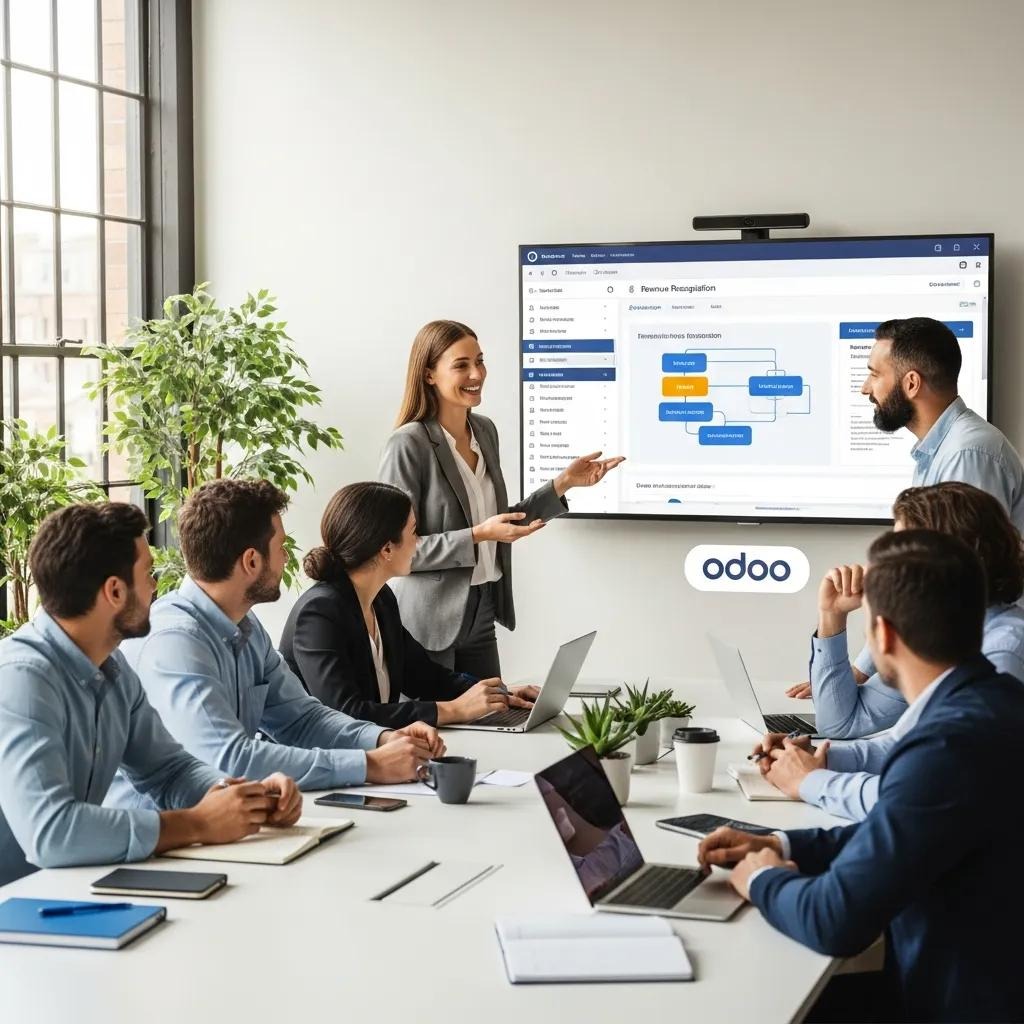
Automation removes repetitive steps and preserves consistency. Odoo automates allocation, recurring recognition for subscriptions, and the accounting entries that follow, freeing your team to focus on judgment calls and exceptions.
Benefits of automating revenue recognition with Odoo
Automating with Odoo reduces manual errors, speeds month‑end close, and improves controls. You get consistent application of recognition policies and clearer records for audits and management reporting.
Managing subscription and SaaS revenue recognition in Odoo
Odoo supports recurring revenue models with tools to track renewals, usage and milestones, and to automate recognition over the contract term — helping SaaS and subscription businesses comply with ASC 606 without manual journal gymnastics.
How to ensure ASC 606 and IFRS 15 compliance using Odoo
Compliance combines process, people and systems. Odoo supplies the system layer — recordkeeping, automation and reporting — while you define policies and exercise the judgments required by the standards.
Common revenue recognition challenges and how Odoo addresses them
Typical pain points include identifying distinct obligations, estimating variable consideration, and handling contract changes. Odoo helps by centralizing contract and pricing data, documenting allocation decisions, and producing a clear audit trail for every recognition event.
Using Odoo to produce audit‑ready financials and disclosures
Odoo’s reporting and ledger features let you compile the contract details, allocation schedules and recognition entries auditors expect. With consistent data capture, disclosures and reconciliations are faster and more reliable.
| Odoo Module | Functionality | Benefit |
| CRM | Centralizes contracts and customer data | Makes contract identification and tracking straightforward |
| Sales | Defines line items and performance obligations | Clarifies what must be delivered and when |
| Accounting | Automates recognition entries and reporting | Ensures timing and amounts are consistent and auditable |
Conclusion
Revenue recognition is a technical but manageable area of financial reporting. Applying the five‑step model consistently and using tools like Odoo to capture contracts, allocations and recognition events reduces risk and speeds close. If you want to make recognition more efficient and audit‑ready, Odoo’s integrated modules provide a practical way to implement your policies — explore our solutions to see how they fit your business.
Frequently Asked Questions
What are the common challenges businesses face with revenue recognition?
Businesses often encounter challenges such as identifying distinct performance obligations, estimating variable consideration, and managing contract modifications. These complexities can lead to errors in financial reporting and compliance issues. To address these challenges, companies should implement robust systems for tracking contracts and obligations, like Odoo, which centralizes data and provides clear documentation for each recognition event, ensuring compliance with ASC 606 and IFRS 15.
How does Odoo support compliance with ASC 606 and IFRS 15?
Odoo aids compliance by automating key processes involved in revenue recognition, such as contract management, performance obligation tracking, and recognition entries. Its integrated modules ensure that all relevant data is captured consistently, allowing businesses to adhere to the standards effectively. Additionally, Odoo’s reporting features help generate the necessary disclosures and audit trails, making it easier for companies to demonstrate compliance during audits.
What types of businesses benefit most from using Odoo for revenue recognition?
Odoo is particularly beneficial for businesses with complex revenue models, such as SaaS companies, subscription services, and those with multiple performance obligations. These businesses often face challenges in tracking and recognizing revenue accurately. Odoo’s automation and centralized data management streamline the revenue recognition process, ensuring compliance with ASC 606 and IFRS 15 while reducing manual errors and improving efficiency.
How can companies ensure accurate transaction price determination?
To ensure accurate transaction price determination, companies should maintain detailed records of contract terms, pricing structures, and historical sales data. Utilizing tools like Odoo can facilitate this process by providing configurable pricelists and reporting capabilities that help estimate variable consideration. Regular reviews and updates of pricing strategies, along with clear documentation of assumptions, are essential for compliance with revenue recognition standards.
What is the significance of performance obligations in revenue recognition?
Performance obligations are crucial in revenue recognition as they define the specific goods or services a company promises to deliver to its customers. Accurately identifying and documenting these obligations ensures that revenue is recognized in accordance with ASC 606 and IFRS 15. This clarity helps businesses avoid misstatements in financial reporting and provides stakeholders with reliable information about the company’s performance.
How does automation improve the revenue recognition process?
Automation enhances the revenue recognition process by reducing manual tasks, minimizing errors, and ensuring consistency in applying recognition policies. Tools like Odoo automate the allocation of transaction prices and the recording of recognition entries, which speeds up the month-end close process. This efficiency allows finance teams to focus on more strategic tasks, such as analyzing financial data and making informed business decisions.
What are the key differences between ASC 606 and IFRS 15?
Both follow the same five‑step model, but they differ in level of prescription and some application areas. IFRS 15 is more principle‑based with detailed guidance in certain areas, while ASC 606 includes specific GAAP requirements. Differences commonly arise around variable consideration, contract modifications and licensing — so international businesses should check both frameworks when preparing financials.
How can businesses prepare for the transition to ASC 606 or IFRS 15?
Start with a gap assessment of existing contracts and recognition practices, train accounting and sales staff, and update systems to capture required data. Pilot the new approach on representative contracts, document judgments, and involve advisors as needed to smooth the transition.
What role does technology play in revenue recognition compliance?
Technology provides the backbone: it captures contract terms, records allocations and automates recognition entries. Systems like Odoo reduce manual work, improve data quality, and make it easier to produce required disclosures and audit evidence.
What are the implications of non‑compliance with revenue recognition standards?
Non‑compliance can lead to misstated financials, regulatory penalties, damaged credibility with investors, and longer, more costly audits. Accurate recognition protects your reputation and supports better business decisions.
How can Odoo assist with audit readiness for revenue recognition?
Odoo keeps a documented trail from contract to journal entry — contract terms, allocations, invoices and recognition entries — so auditors can trace decisions and amounts. That transparency speeds reviews and reduces queries.
What are the best practices for managing subscription revenue recognition?
Clearly define performance obligations, automate recurring recognition, review contracts regularly for changes, and document your policies and estimates. Using tools like Odoo for subscription tracking reduces errors and supports consistent treatment across contracts.